Showing posts with label rambles. Show all posts

Tuesday, June 24, 2014

Holly - RIP

Holly: March 30, 2005 - June  24, 2014

Today I am very sad for losing her, hopefully in the future I will be able to smile again for the good times we had together.

Monday, May 26, 2014

California Sunflower

California Sunflower by Cliff Hutson
Coast Sunflower by Cliff Hutson
Encelia californica: California Sunflower, also known as Coastal Sunflower and California Encelia.  I have seen it referred to as Brittlebush, but that would be Encelia farinosa to me.

California Sunflower grows in the Coastal Sage Scrub habitat of Southern California.

Coastal sage scrub species have adapted to an ecosystem that rarely freezes in the winter and only occasionally experience temperatures over 90-degrees F during the dry California summer.

Monday, January 20, 2014

Bladderpod


Peritoma arborea

There is a video which posits that taxonomists, having no new plants to name, have begun to rename all of the plants with which we are familiar.  That obviously overstates the matter. But, as a non-botanist observer of the plant kingdom, I understand what they are saying. Bladderpod plant is a case in point. 

When I first came upon the plant, in the late 1970s, it had the scientific name of Isomeris arborea (Nutt.). Then about December 1989 the name was changed to Cleome isomeris (Greene). Next, in July 2010, it became Peritoma arborea (Nutt.). Furthermore, it was moved from the Capparaceae (which includes capers) to a family named Cleomaceae (spiderflowers). Lastly, it has been divided into three varieties based on the shape of the fruit, with var. angustata having fusiform fruits, var. arborea having obovoid fruits, and var. globosa having spherical fruits. 

It is endemic to California occurring in varied habitats: Coastal Sage Scrub, Creosote Bush Scrub, and Joshua Tree Woodland. Which is to say, it ranges from the deserts to the Channel Islands. The plant is a branched shrub that can up to six feet in height. It has thin, evergreen leaves about half an inch to an inch long. Bladderpod will flower in any month of the year. This is not very common in California natives. The flowers, appearing as abundant inflorescences at the ends of the stem branches, are yellow with long stamens. The inflated bladder-like fruits give the plant its common name. Some say that the epithet “Isomeris” was a nod to the equal halves of these pods.


Bladderpod is generally described as ill-smelling. However, in my experience, rubbing a pod produces a scent much like that of bell pepper which I think is not bad at all.

Monday, December 2, 2013

California Dodder

One of the sites I refer to when preparing to write about a plant I encounter in my rambles is maintained by the Consortium of California Herbaria  which provides information about California vascular plant specimens that are housed in participant herbaria. One can search on just about any plant and obtain a list of accessions from around the state.

California Dodder (Cuscuta californica), hits close to home as it has records dating from 1897 to 2009 for specimens found in and around Claremont. Two of these are housed in the Rancho Santa Ana Botanic Garden herbarium. One was collected from the Bernard Field Station, just to the east. The other was found along Thompson Creek, where Holly and I often pass by the plant.

California Dodder

Cuscuta californica, also called Chaparral Dodder, is an annual parasitic herb or vine that is native to California. It is also found outside of California, but is confined to western North America. Dodder is readily identified by its threadlike, hairless, yellow, orange, or red shoots which twine around host plants eventually creating a tangled mat. One notable feature is that it does not usually have roots that reach the ground. Instead, knoblike organs along the shoot (haustoria) penetrate the host stem. Shoots either lack leaves or have very tiny red, yellow, or orange scalelike leaves pressed close to the stem. It tends to bloom from May through October. The white flowers are tiny, only about 3 to 6 millimeters wide. The fruits are even smaller.

Dodder once had its own family, but it is now consigned to CONVOLVULACEAE, the Morning Glory Family. The epithet Cuscuta seemingly comes from Cuscu'ta a name of Arabic derivation meaning "dodder”. The common name, Chaparral Dodder, tips us to one of its habitats. It is also found through out the state in many other plant communities such as forests and grasslands. And, of course, “the City of Trees and PhDs”.

Thursday, June 13, 2013

Obscure Object of Desire

"So many nights I just dream of the ocean
God I wish I was sailin again"


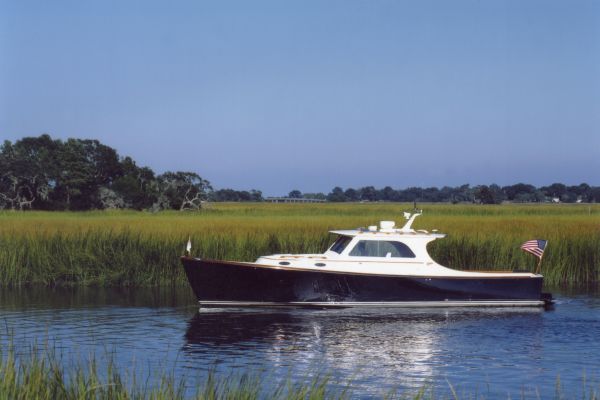
Science has proven that heartaches are healed by the sea. A Hinckley Picnic Boat just might be the cure for what ails me. But, as most boat owners find out - you spend about twice as much on gas, upkeep, and storage as you planned; and only have about a third as much fun as you thought you would. Still one can dream. Gunkholing would be a ramble of a different sort.


Lyrics | Jimmy Buffett lyrics - Changes In Latitudes, Changes In Attitudes lyrics

Wednesday, May 22, 2013

Laguna Lake


Laguna Lake is located in Fullerton, California. My daily commute, for many years, took right past the turnoff for it, but I never checked it out until the capture of a giant turtle made the news.

"Old Bob" was a 100 lb. Alligator Snapping Turtle. The prehistoric monster, before his 2004 capture, trolled the waters of the lake terrorizing ducks and snatching fish from the lines of baffled anglers.

He was not a native, The largest freshwater turtle, the alligator snapping turtle is found primarily in southeastern United States waters. He seemed huge to those of us from California, but he was actually on the smallish side for one of his ilk. Adult alligator snapping turtles generally range in carapace length from 15.9 to 31.8 inches and weigh from 50 to 180 pounds. Anyway, he put the lake on the map for many of us.

Once I truly discovered it, I tried the fishing. The DFG stocks this park lake from late Fall to early Spring with Rainbow Trout and Channel Catfish from late Spring to early Fall. There are also Largemouth Bass, Sunfish, and Carp. I never caught much. While I consider myself to be an avid fisherman, I am not a very good one.Others such as the guy at UrbanFlyVentures have much better success.

And, truth be told it has be a couple of years since I last visited. But, I recently ran across a photo and had some fun reworking it with a PhotoShop app on my iPod and wanted to share it. Ah vanity.

Saturday, May 4, 2013

Monday, March 4, 2013

Hoary-leaved Ceanothus


hoary |ˈhôrē|
adjective ( hoarier , hoariest )
1 grayish-white : hoary cobwebs.
(of a person) having gray or white hair; aged : a hoary old fellow with a face of white stubble.
  • [ attrib. ] used in names of animals and plants covered with whitish fur or short hairs, e.g., hoary bat, hoary cress.

There are at least 52 species of ceanothus in the world. California is home to 43 species, sometimes known as California lilac, and 13 of these are native to the chaparral of Southern California. The dominant species in our local, lower-elevation, Santa Monica Mountains is Bigpod Ceanothus, Ceanothus megacarpus. However, at higher elevations it is replaced  Ceanothus crassifolius, Hoary-leaved Ceanothus. 

Plants in the genus Ceanothus are divided in to two groups - the subgenus Ceanothus and the subgenus Cerastes. The later is actually the larger group. But, I think that most of us, thanks to its showy displays, are more familiar with the former which is characterized by thin leaves that have three main veins, arrayed alternately on the stems. The leaves of Cerastes are leathery with a single main vein, and generally opposite in arrangement. 

A member of the Buckthorn family (Rhamnaceae) it is a large, evergreen shrub which may grow to twelve feet in height.  The leathery olive green leaves have white fuzzy undersides, which makes them hoary. The field guides I use describe the leaves as being “small”, which seemed a bit vague.  An internet gardening catalog stated they they are 1/4­ to 1/2" long. However, I took some measurements on a specimen at Rancho Santa Ana Botanic Garden and found them to be closer to 1-1 1/2”. Which reminds me of the old taunt - “Who are going to believe, the facts or your lying eyes?” The small (truly about a quarter of an inch), rounded flowers are white with the inflorescences borne on short stalks.

Hoary-leaved Ceanothus is distributed through the Outer South Coast Range, Transverse Range, Peninsular Range, and Northern Baja on dry ridges or slopes below 3700'. Which is to say locally we can find it in the Verdugo, San Gabriel, Santa Monica and San Bernardino Mountains.


There are plenty of chances to see it, let’s go look.

Monday, February 4, 2013

Laurel Sumac - Malosma laurina


One of my fondest memories as a teenager is running through the interior of Los Angeles’ Griffith Park right after a rain or on a cool foggy morning and smelling the fragrances of the plants of the the chaparral and scrub-covered hills. One of the main contributors to that aroma was Laurel Sumac, then classified as Rhus laurina, but now known as Malosma laurina.

This 10 to 20 foot tall shrub is the only species in the genus Malosma. It native only to Southern California and the Baja California Peninsula; and found in both the Chaparral and Coastal Sage Scrub communities from sea level up to 3300 feet in elevation. The shiny red-green leaves are four to ten inches long and have a somewhat taco shell fold. When flattened, they have the shape of laurel leaves which gives us the common name Laurel, with Sumac in recognition that it is in the Sumac Family—Anacardiaceae. (Just in passing, this family also includes cashews, mangos, and poison oak!)

Locally, Laurel Sumac occurs naturally in the hills fronting Thompson Creek in Claremont. This is fitting for its historic geographical and economic context for our region. Malosma is not tolerant of hard frost. Something is has in common with two important commercial crops in California. Anywhere it grows naturally turns out to be ideal for avocado and citrus as well. Growers became aware of this and began to use it as a “sentinel plant” when looking for land for their ranches.

While I am fond of the fragrance I would be hard pressed to describe it. I am not alone in this. The Jepson Manual says Malosma is Latin: “from odor which resembles that of an apple.” However, Nuttall's description says the aromatic odor is “something like that of the Bitter Almond." I suggest you check it out for yourself. 

Thursday, August 12, 2010

At the Falls


At the Falls
Originally uploaded by The Marmot
Eaton Falls

“Hither come the San Gabriel lads and lassies, to gather ferns and dabble away the their hot holidays in the cool water, glad to escape their commonplace gardens and orange-groves.”

- The Mountains of California by John Muir

About the beginning of August 1877, the naturalist John Muir made a trip into the San Gabriel Mountains to the northeast of Los Angeles. The world has changed quite a bit since then as the range no longer overlooks the vineyards and groves he describes. Today, there are “seventy-two suburbs in search of a city” as some other author has famously written. However, somethings do remain the same as my daughter, granddaughter, and I discovered this past weekend.

Muir’s ramble, as described in The Mountains of California (in a chapter called The Bee-Pastures), took him through Pasadena and up the boulder strewn bed of Eaton Creek into Eaton Canyon. The three of us, starting off at the Nature Center, probably did not exactly follow in his footsteps as flood, fire, and human intervention over the intervening years have altered the landscape. Our path began as a fairly easy, sun-baked, 1.1 mile amble along a fire road through the Eaton Canyon Wash, which has some commendable live oaks, to the Mt. Wilson Toll Road bridge. After that it got a little more interesting.

Passing under the bridge the path narrows, enters the mouth of the V-shaped gorge that is the proper canyon, and follows the creek bed for the most part. The going is not too rough, although there is some boulder-hopping and/or wading involved in several stream crossings. The less agile, such as myself, may have to scramble in a couple of steep places. Afoot & Afield Los Angeles County by Jerry Schad calls this a "Moderate" hike,i.e., suitable for all physically fit people. Becca, collegiate athlete that she is, bounded right along and got only one foot wet the entire hike. I was in the water so often that I was very glad to have worn my “canyoneering” shoes and shorts. I have little doubt that I was the oldest hiker out there that afternoon and people of all ages, shapes, and sizes make the trip. And, about a half mile past the bridge, we all see what Muir saw.

The cascade of Eaton Falls still plunges through a notch in a ledge and falls some thirty-five or forty feet into a pool. The face of the cliff still has ferns and mosses. Even though there are no more orange groves to escape from, people still come to seek relief from the summer heat and enjoy the sound of the crashing water.

While it was more than a little crowded, we enjoyed sitting around watching people and dogs splash and frolic in the roundish pool which seems to be about three feet in depth at its deepest. I took a few photos and we returned the way we came arriving at the parking lot some two and a quarter hours from our original starting time.

I highly recommend this hike to anyone who wishes to see what might be the finest waterfall in the San Gabriels. Just Google map your way to the Eaton Canyon Nature Center at 1750 North Altadena Drive, Pasadena, CA and take the Eaton Canyon Falls Trail.

Saturday, July 3, 2010

On Seeing Deer


Mule Deer
Originally uploaded by The Marmot
An Artificial Obvious

One of the most asked questions along the Thompson Creek Trail is - “did you see the the deer?” To which, alas, I usually have to answer “no”.

I have seen quite a few deer in my lifetime. When I was in high school I spent a lot of time running through the hills and dales of Los Angeles's Griffith Park and saw them all the time, usually on the golf courses. It is kind of difficult to miss a good sized herd of large animals on a closely trimmed fairway. And, I did manage to see this one along the creek and photograph it.

Seeing them in the mountains is another story. This was painfully brought to my attention about forty years ago when a young woman of my acquaintance invited me to spend a weekend at her family’s cabin in Mineral King. One evening the two of us and another couple sat on the east-facing porch to watch the setting sun illuminate the west-facing slope across from us. The other three began seeing what must have amounted to dozens of deer. I never saw a one, much to my embarrassment.

Steward Edward White tells in The Mountains that deer can be invisible to the untrained eye even when they are standing in “plain sight. Seemingly, many people, like me, can look straight at them and not see them at all. White discusses what he calls creating “an artificial obvious” as the key to seeing deer.

I first came upon the phrase while reading Annie Dillard’s A Pilgrim at Tinker’s Creek. She did not shed much light on it as far as was concerned. But, now that i have gone to the source, I now understand that in a way we all view the natural world through a filter of sorts. This is to say that in any given situation we tend to see what we want to see and disregard the rest. Thus as I walk along the creek I first pay attention to the light as a photographer. Secondly I tend to notice plants, flowers, and birds based on my work at the botanic garden. Therefore, my eye tends to skip over the brown or gray splotches that would be deer. White, on the other hand, as a hunter will pass his eye over a slope and miss the flowering bush but see the buck which was hidden to me.

Holly seems to have constructed her own artificial obvious as well. Hers appears to be based on size. A lizard of say two to three inches is of no importance. A larger one is worthy of investigation. Her interest then ranges through birds such as towhees, squirrels, rabbits, cats, and other dogs. I find it noteworthy that she can spot a cottontail the same distance from us as the deer in the above photo and become excited. Yet, she exhibited no indication that the deer was there at all. Perhaps she feels that at her size large mammals are best ignored. If you pretend they are not there, they might not see you and just go away. While small reptiles and insects may be beneath her dignity. It occurs to that the little random bred's make-up is primarily terrier. Terriers were bred to pursue vermin such as rats and foxes. These certainly fall within the size of animals that attract her attention. So, Holly's artificial obvious could be genetic.

Do we all live in a world of our own design?

Saturday, June 19, 2010

Eucalyptus


Eucalyptus (1)
Originally uploaded by The Marmot
Gum Trees

“. . . they’re planting windbreaks of of gum trees. Eucalyptus-comes from Australia. They say the gums grow ten feet a year. Why don’t you try a few rows and see what happens? In time they should back up the wind a little and they make grand firewood.”

- East of Eden by John Steinbeck

According to my 1988 copy of the Sunset Western Gardening Book, Eucalyptus are the most widely planted non-native trees in California and Arizona. It maintains that you can drive several hundred miles in parts of California and never lose sight of one. I am not sure that is the case any more for Southern California. I know that in my youth miles and miles of of Baseline and Foothill, from the foothill communities out through Fontana and beyond, were lined with eucalyptus. But, as vineyards and farms became housing developments and shopping malls the trees went with them.

The first eucalyptus came to California in the mid-1850s and over the years became popular, as noted by Steinbeck, for windbreaks and firewood. Additionally, many thousands of acres were planted in the hope of getting rich by selling the wood to the railroads to be as ties for the rails. Companies advertised in the newspapers and issued booklets and broadsides describing to unsuspecting souls the beauty of California and how a fortune could be be made from the trees they could provide when you bought their land. Sadly, the only people who got rich were the companies selling the land and trees. It seems that, of the some 500 species of eucalyptus, the trees they sold were singularly unsuited to be used as hardwood railroad ties as the wood would not stay straight after being cut and cured.

Even so, many types of eucalyptus have easily adapted to our lands which parallel similar climate zones in their native Australia. Thus they thrive here in Southern California’s Mediterranean climate and in what I consider to be the considerably harsher environment of California’s Central Valley.

There used to be, and perhaps still is, an interesting difference in how the trees were planted in the two areas. Growing up down here I was used to seeing the trees planted along roadsides and in rows between fields. However, in the Central Valley, along 99W near the town of Dunnigan for example, large farms would have seemingly hundreds of Eucalyptus all jammed in to one small corner of the property. The trees were planted so closely together that a cat would have had trouble walking between them. My friends from Davis were of the opinion that this was a clever way of scamming the homesteading requirements.

The government would give sections of land away in exchange for a promise to make certain improvements, including the planting of so many trees per acre. I am sure that the bureaucrats envisioned that these trees would be nicely spaced out over the land. That, of course, would interfere with the cultivation of crops and the farmers quickly figured out how to meet the letter of the law (if not the intent) while maximizing room for food or fodder.

The trees were still lovely.

Monday, May 3, 2010

Black Mustard


Black Mustard 2
Originally uploaded by The Marmot
Black Mustard

Last week, Holly and I began seeing patches of Black Mustard (Brassica nigra) on the far side of Thompson Creek, west of Higginbotham Park, while walking on the paved path. This is another one of those plants that is so commonplace most people assume that is a native. But, it is not.

Popular lore has it that the early Spanish explorers, such as Juan Bautista de Anza, spread the seeds of this plant along the routes that they forged ala Hansel and Gretel. Presumedly, the plant would be in bloom during the return trip and they could easily find their way home. I would like to think that this story is true. But, table mustard is made from black mustard so no doubt many people planted for that purpose

Whatever the reason, it is now common through out California and dominates the hillsides in our area at this time of year. Each Spring finds the hills covered in bright yellow flowers. The bloom begins in April and can extend through July.

Some sources say that black mustard, though widespread, is not considered to be as big a problem as some other invasive species. It prefers disturbed habitats, such as roadsides, and is not as likely to extend in to truly natural areas. However, fire counts as a disturbance and other studies have shown that mustard has totally displaced many of our endemic fire annuals. It has decidedly naturalized and as people further encroach in the sage scrub and chaparral environments it and other broad-leaved herbs are sure to follow.

Mustard and the majority of the native plant species in Southern California have their roots in the Mediterranean Basin. The climates are pretty much the same which allows these plants to adapt, settle in, and then take over when conditions are ripe.

These conditions are decidedly in force along Thompson Creek. The landscape surrounded on all sides by homes, parks, a flood control channel, and the effects of the Grand Prix Fire of 2003 still in evidence it is the very definition of a disturbed environment. Still it is a welcome oasis from the urban surroundings.

Monday, March 29, 2010

Green Waves of Grass


Well, the wind sings its own song


Moving patiently along


    • Thomas George Russell

“Santa Ana Wind”


An odd wind rose up seemingly from nowhere the other day as Holly and I were out walking along Thompson Creek. It was not a Santa Ana, nor did it seem to be ill-intentioned like the wind in the Tom Russell song. However, it did have its own tune and I marveled at the way it made the grass on the far hillside move.


I was, at first, somewhat dismayed that I had no way to capture the moment, then I realized that I had my new iPod nano in my pocket and was able to create the accompanying little video. I think it came out well considering the limitations of the technology of putting a video camera in such a tiny device. I did eliminate the audio track as the rush of the wind just turned out as a dull roar. Not a song after all.


It is fairly certain that this is a non-native grass. Introduced grasses in this area include the bromegrasses (Bromus spp.), wild oats (Avena spp.), and ryegrasses (Lolium spp.). If they were sentient, they would be ill-intentioned as introduced grasses have effectively replaced our native grasses in this disturbed area. Between the wear and tear of encroaching human activity and the big fire of October 2003 most native plants are in a struggle for existence.


There are two non-native shrubs that are plentiful along the creek. They are rock-rose (Cistus spp.) (see photo) and rosemary (Rosmarinus officinalis). Most of these appear to be planted. However, their occurrence is not uncommon in the chaparral throughout California as they are Mediterranean plants that have naturalized and do quite well on their own in our environment.


I think that I have also spotted Scotch broom (Cytisus scoparius) although I can not get close enough to verify it. It is another invasive species that grows so well in the Santa Monic Mountains (my home range) that I thought it was a native until I learned better. I feel that its ability to take root (pun intended) can be paralleled to the earliest human settlement of California, in the Late Pleistocene and Early Holocene, and the subsequent waves of migration. Unlike some communities, where if you are not a member of the founding families you will always be an outsider regardless of how many generations your own family has lived there, moving here practically makes you a native overnight if you want to be one. However, we do draw a line for vegetation.