Tuesday, August 20, 2013

Summer Holly

Summer holly (Comarostaphylis diversifolia) is found in coastal chaparral from Santa Barbara County southerly into Baja California. There may be populations on the Channel Islands as well. Some sources cite that the geography makes for two subspecies: Comarostaphylis diversifolia ssp. diversifolia in coastal Southern California and Baja; and Comarostaphylis diversifolia ssp. planifolia on the Channel Islands and the Transverse Ranges north of Los Angeles. It is not very common, but not yet listed as rare.

Comarostaphylis diversifolia

A slow‐growing, evergreen shrub or tree to 20 ft. tall. Attractive features include shiny leaves, white flowers, red berries and shredded bark. While the flowers are urn-shaped similar to the more familiar manzanita, the red berries are warty or wrinkly rather than smooth. That feature also distinguishes it from toyon. Summer holly is a member of Ericaceae, commonly known as the heath or heather family, a family of flowering plants found most commonly in acid and infertile growing conditions.

Thursday, June 13, 2013

Obscure Object of Desire

"So many nights I just dream of the ocean
God I wish I was sailin again"


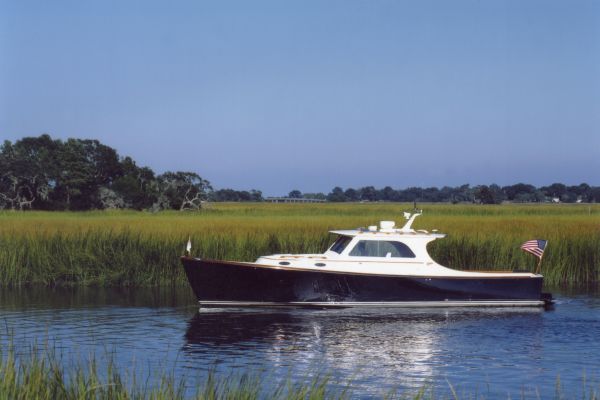
Science has proven that heartaches are healed by the sea. A Hinckley Picnic Boat just might be the cure for what ails me. But, as most boat owners find out - you spend about twice as much on gas, upkeep, and storage as you planned; and only have about a third as much fun as you thought you would. Still one can dream. Gunkholing would be a ramble of a different sort.


Lyrics | Jimmy Buffett lyrics - Changes In Latitudes, Changes In Attitudes lyrics

Wednesday, May 22, 2013

Laguna Lake


Laguna Lake is located in Fullerton, California. My daily commute, for many years, took right past the turnoff for it, but I never checked it out until the capture of a giant turtle made the news.

"Old Bob" was a 100 lb. Alligator Snapping Turtle. The prehistoric monster, before his 2004 capture, trolled the waters of the lake terrorizing ducks and snatching fish from the lines of baffled anglers.

He was not a native, The largest freshwater turtle, the alligator snapping turtle is found primarily in southeastern United States waters. He seemed huge to those of us from California, but he was actually on the smallish side for one of his ilk. Adult alligator snapping turtles generally range in carapace length from 15.9 to 31.8 inches and weigh from 50 to 180 pounds. Anyway, he put the lake on the map for many of us.

Once I truly discovered it, I tried the fishing. The DFG stocks this park lake from late Fall to early Spring with Rainbow Trout and Channel Catfish from late Spring to early Fall. There are also Largemouth Bass, Sunfish, and Carp. I never caught much. While I consider myself to be an avid fisherman, I am not a very good one.Others such as the guy at UrbanFlyVentures have much better success.

And, truth be told it has be a couple of years since I last visited. But, I recently ran across a photo and had some fun reworking it with a PhotoShop app on my iPod and wanted to share it. Ah vanity.

Saturday, May 4, 2013

Tuesday, April 23, 2013

Oak Woodland


When I picture a oak woodland in my mind it is one with coast live oaks that stand closely together so that their canopies overlap. Low bushes cover the ground along with a layer of debris.

Coast live oak (Quercus agrifolia) is the most abundant species of oak along the California coast, ranging from Sonoma County into Baja California. Of course, in other parts of the state different oaks will predominate; but coast live oak is the one I grew up  and continue to see almost daily.

It is well adapted to to our Mediterranean climate of hot, dry summers and cool, hopefully rainy winters. Coast live oaks are evergreen, with a tough little leaf. 

The oak woodland is one of my favorite habitats. More than coincidently, I guess, in it are found some of my favorite animals as well: Acorn Woodpecker, Western Scrub Jay, and Western Gray Squirrel to recite just three. Plants in this habit could include California Bay and Toyon.

I have read that many early settlers wrote about the mystical beauty of these trees. I certainly get an inspirational feeling when ever I get the opportunity to spend some quiet moments of reflection in a such a grove.

Monday, March 4, 2013

Hoary-leaved Ceanothus


hoary |ˈhôrē|
adjective ( hoarier , hoariest )
1 grayish-white : hoary cobwebs.
(of a person) having gray or white hair; aged : a hoary old fellow with a face of white stubble.
  • [ attrib. ] used in names of animals and plants covered with whitish fur or short hairs, e.g., hoary bat, hoary cress.

There are at least 52 species of ceanothus in the world. California is home to 43 species, sometimes known as California lilac, and 13 of these are native to the chaparral of Southern California. The dominant species in our local, lower-elevation, Santa Monica Mountains is Bigpod Ceanothus, Ceanothus megacarpus. However, at higher elevations it is replaced  Ceanothus crassifolius, Hoary-leaved Ceanothus. 

Plants in the genus Ceanothus are divided in to two groups - the subgenus Ceanothus and the subgenus Cerastes. The later is actually the larger group. But, I think that most of us, thanks to its showy displays, are more familiar with the former which is characterized by thin leaves that have three main veins, arrayed alternately on the stems. The leaves of Cerastes are leathery with a single main vein, and generally opposite in arrangement. 

A member of the Buckthorn family (Rhamnaceae) it is a large, evergreen shrub which may grow to twelve feet in height.  The leathery olive green leaves have white fuzzy undersides, which makes them hoary. The field guides I use describe the leaves as being “small”, which seemed a bit vague.  An internet gardening catalog stated they they are 1/4­ to 1/2" long. However, I took some measurements on a specimen at Rancho Santa Ana Botanic Garden and found them to be closer to 1-1 1/2”. Which reminds me of the old taunt - “Who are going to believe, the facts or your lying eyes?” The small (truly about a quarter of an inch), rounded flowers are white with the inflorescences borne on short stalks.

Hoary-leaved Ceanothus is distributed through the Outer South Coast Range, Transverse Range, Peninsular Range, and Northern Baja on dry ridges or slopes below 3700'. Which is to say locally we can find it in the Verdugo, San Gabriel, Santa Monica and San Bernardino Mountains.


There are plenty of chances to see it, let’s go look.