Wednesday, October 30, 2013

Apache Plume

I write a column called "Plant of the Month" for Oaks Notes the newsletter for the volunteers at Rancho Santa Ana Botanic Garden. One of the pleasures I derive from writing these articles is that my research deepens my knowledge of the plants I pick for the column. Recently I was almost too ashamed to admit that I found out that what, for decades, I have taken to be the flower of Apache Plume is actually its fruit.

Apache Plume (Fallugia paradoxa) belongs to ROSACEAE, the rose family. It is native to the arid habitats of the mountains of east San Bernardino County. It is also found in the desert woodlands and scrub of Nevada, Utah, Arizona, Colorado, Texas, and northern Mexico. It is the only member of its genus. Which is to say it is monotypic. 

The flower of the shrub is roselike, or to some a little like an apple blossom, with rounded white petals and a center filled with many thready stamens and pistils. The flowers are small, but not inconspicuous if one really looks at the bush when preparing to write about it.

However, the persistent fruits have distinctive feathery plumes that look a lot like pompoms. They are formed when the ovary of the flower remains after the petals fall away, leaving the styles, each 3 to 5 centimeters long. Each style is attached to a fruit, which is a small achene. The plant is covered with these clusters. They are greenish at first, turning pink or reddish tinged later on.

Apache Plume
Eventually the plumes turn white and when backlit are quite spectacular. The fruit finally disperses when wind catches the styles and blows them away.

Apache Plume

The plant grows three to eight feet tall, with straw-colored branches and spreads six to eight feet. The small leaves are green on top and rusty underneath. Apache Plume can look a little scruffy, but still be attractive in a drought tolerant garden.

Tuesday, August 20, 2013

Summer Holly

Summer holly (Comarostaphylis diversifolia) is found in coastal chaparral from Santa Barbara County southerly into Baja California. There may be populations on the Channel Islands as well. Some sources cite that the geography makes for two subspecies: Comarostaphylis diversifolia ssp. diversifolia in coastal Southern California and Baja; and Comarostaphylis diversifolia ssp. planifolia on the Channel Islands and the Transverse Ranges north of Los Angeles. It is not very common, but not yet listed as rare.

Comarostaphylis diversifolia

A slow‐growing, evergreen shrub or tree to 20 ft. tall. Attractive features include shiny leaves, white flowers, red berries and shredded bark. While the flowers are urn-shaped similar to the more familiar manzanita, the red berries are warty or wrinkly rather than smooth. That feature also distinguishes it from toyon. Summer holly is a member of Ericaceae, commonly known as the heath or heather family, a family of flowering plants found most commonly in acid and infertile growing conditions.

Thursday, June 13, 2013

Obscure Object of Desire

"So many nights I just dream of the ocean
God I wish I was sailin again"


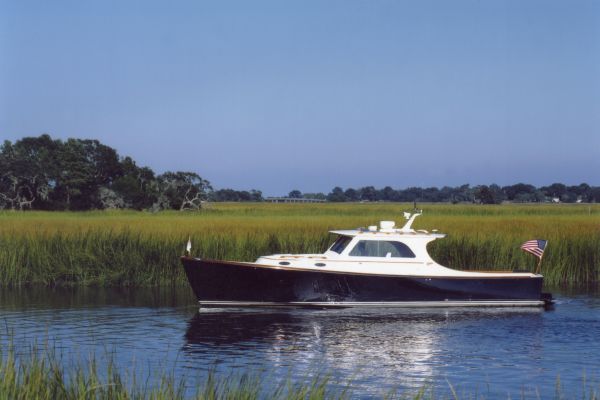
Science has proven that heartaches are healed by the sea. A Hinckley Picnic Boat just might be the cure for what ails me. But, as most boat owners find out - you spend about twice as much on gas, upkeep, and storage as you planned; and only have about a third as much fun as you thought you would. Still one can dream. Gunkholing would be a ramble of a different sort.


Lyrics | Jimmy Buffett lyrics - Changes In Latitudes, Changes In Attitudes lyrics

Wednesday, May 22, 2013

Laguna Lake


Laguna Lake is located in Fullerton, California. My daily commute, for many years, took right past the turnoff for it, but I never checked it out until the capture of a giant turtle made the news.

"Old Bob" was a 100 lb. Alligator Snapping Turtle. The prehistoric monster, before his 2004 capture, trolled the waters of the lake terrorizing ducks and snatching fish from the lines of baffled anglers.

He was not a native, The largest freshwater turtle, the alligator snapping turtle is found primarily in southeastern United States waters. He seemed huge to those of us from California, but he was actually on the smallish side for one of his ilk. Adult alligator snapping turtles generally range in carapace length from 15.9 to 31.8 inches and weigh from 50 to 180 pounds. Anyway, he put the lake on the map for many of us.

Once I truly discovered it, I tried the fishing. The DFG stocks this park lake from late Fall to early Spring with Rainbow Trout and Channel Catfish from late Spring to early Fall. There are also Largemouth Bass, Sunfish, and Carp. I never caught much. While I consider myself to be an avid fisherman, I am not a very good one.Others such as the guy at UrbanFlyVentures have much better success.

And, truth be told it has be a couple of years since I last visited. But, I recently ran across a photo and had some fun reworking it with a PhotoShop app on my iPod and wanted to share it. Ah vanity.

Saturday, May 4, 2013